
Blog Image
Design & UX
|
Dec 10, 2026
|
Blog Author Image
Lucas bennett

Spatial experience design

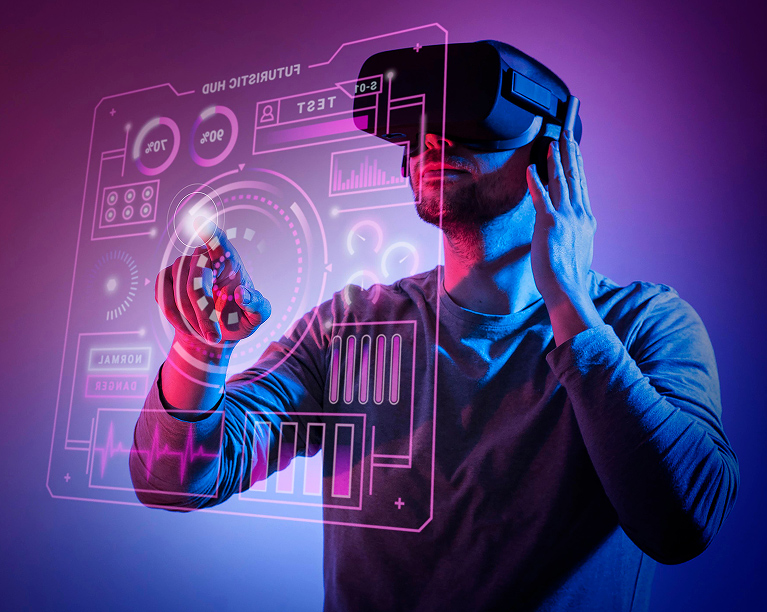
As digital experiences expand into AR, VR, and mixed reality, designers must move beyond flat screens and traditional UI patterns. Spatial interfaces require thinking environment creating interactions that feel natural within physical space.

What does designing for spatial interfaces involve?

Designing for spatial interfaces means building systems that respond to real-world context while maintaining clarity, usability, and comfort.

  • Design with depth, scale, and spatial awareness
  • Use intuitive inputs like gestures, gaze, and voice
  • Create clear visual hierarchy in 3D environments
  • Ensure ergonomic and cognitive comfort
“Scalable AR isn’t about adding features — it’s about designing systems that adapt.”

Key rakeaways

  • Think in environments, not just layouts
  • Prioritize simplicity to reduce cognitive load
  • Maintain consistency across immersive devices
  • Test in real-world scenarios early

Spatial interfaces are redefining how and train. Thoughtful design ensures these immersive experiences remain and impactful across industries.

Share -
  • social  icon
  • social  icon
  • social  icon
  • twitter-icon-dark

Related insights

Explore how VR, AR, and spatial computing are transforming industries. From product design to enterprise training
More articales
More articales
Technology
Blog Author Image
Ethan brooks
|
Jan 30th, 2026
Blog Image
Design & UX
Blog Author Image
Michael turner
|
Oct 24th, 2026
Blog Image
Virtual reality
Blog-author-image
Olivia carter
|
Feb 27th, 2026
Blog Image
Design & UX
Blog-author-image
Lucas bennett
|
Dec 10th, 2026
Blog Image
Let’s
cta-imagecta-image
create
immersive reality

Partner with a team that designs and builds powerful VR and AR solutions—from concept to deployment.

More Templates